---
title: Gold, Antique, Matte or Dual Plated? How to Choose the Right Medal Finish
description: The best medals aren’t just manufactured. They’re designed with intention.
image: https://blog.badgesandmedals.com/hubfs/IMG_4074.jpg
---
[](https://badgesandmedals.com/)
- Products
- [Challenge Coins](https://badgesandmedals.com/challenge-coins/)
- [Custom Medals](https://badgesandmedals.com/custom-medals/)
- [Government Insignia](https://badgesandmedals.com/products-government-insignia/)
- [Lapel Pins](https://badgesandmedals.com/badgewear/)
- [School Badge Wear](https://badgesandmedals.com/school-badge-wear/)
- TOOLS ↴
- [Order Timeline Calculator](http://badgesandmedals.com/order-timeline/)
- Success Stories
- [Mass Participation](https://badgesandmedals.com/success-stories-mass-participation/)
- [Sporting Bodies](https://badgesandmedals.com/success-stories-sporting-bodies/)
- About
- [Who We Are](https://badgesandmedals.com/about/)
- [Sustainability Programmes](https://blog.badgesandmedals.com/learning-centre/badges-and-medals-sustainable)
- [Medal Reveal Videos](https://badgesandmedals.com/medal-reveal-videos/)
- [FAQs](https://blog.badgesandmedals.com/learning-centre/common-questions-badges-and-medals)
- [Pricing](https://badgesandmedals.com/pricing/)
[Learning Centre](https://badgesandmedals.com/learning-centre)
[Contact Us](https://badgesandmedals.com/contact/)
[](https://badgesandmedals.com/)
- Products
- [Challenge Coins](https://badgesandmedals.com/challenge-coins/)
- [Custom Medals](https://badgesandmedals.com/custom-medals/)
- [Government Insignia](https://badgesandmedals.com/products-government-insignia/)
- [Lapel Pins](https://badgesandmedals.com/badgewear/)
- [School Badge Wear](https://badgesandmedals.com/school-badge-wear/)
- TOOLS ⇥
- [Order Timeline Calculator](http://badgesandmedals.com/order-timeline/)
- Success Stories
- [Mass Participation](https://badgesandmedals.com/success-stories-mass-participation/)
- [Sporting Bodies](https://badgesandmedals.com/success-stories-sporting-bodies/)
- About
- [Who We Are](https://badgesandmedals.com/about/)
- [Sustainability Programmes](https://blog.badgesandmedals.com/learning-centre/badges-and-medals-sustainable)
- [Medal Reveal Videos](https://badgesandmedals.com/medal-reveal-videos/)
- [FAQs](https://blog.badgesandmedals.com/learning-centre/common-questions-badges-and-medals)
- [Pricing](https://badgesandmedals.com/pricing/)
- [Learning Centre](https://badgesandmedals.com/learning-centre/)
- [Get A Quote](https://badgesandmedals.com/contact/)
# Gold, Antique, Matte or Dual Plated? How to Choose the Right Medal Finish
Written on 06/03/2026. Posted in [Custom Medals](https://blog.badgesandmedals.com/learning-centre/tag/custom-medals) .
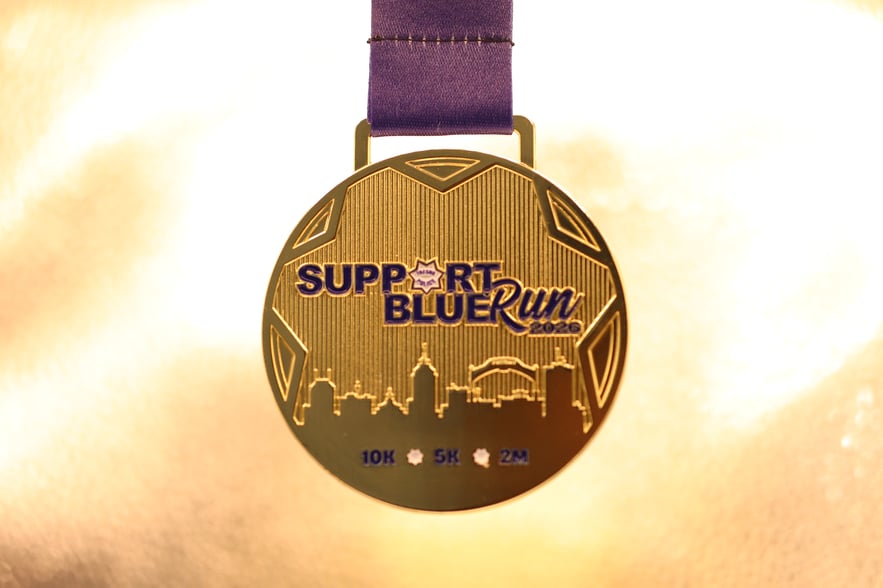
When people think about medal design, they usually focus on the shape, the logo, or the artwork.
But one of the most important design choices often gets decided at the very end...
The finish.
A medal’s finish doesn’t just affect how it looks.
It affects how it *feels*.
The exact same medal design can look classic, modern, bold, or high-end depending on whether it’s shiny, matte, antique, or dual plated.
If you’re ordering custom medals and unsure which finish is right, this guide breaks down the most common options and how to choose the best one for your event.
Why the Finish Matters
The finish affects how the medal reflects light, how much contrast the details have, and whether the design feels traditional or modern.
It also changes the “value” people feel when they hold it.
A strong finish can make a simple medal look premium, and the wrong finish can make a great design look flat.
## 1. Shiny
Best for: traditional competitions, award ceremonies, podium-style events
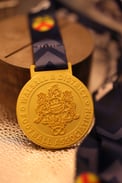
Shiny finishes are the most classic medal look. They’re bright, reflective, and instantly recognizable.
Shiny gold is still the most popular choice for first-place medals because it’s familiar and feels official. Shiny silver and shiny bronze also work well for events that want a clean, traditional award style.
Touch Why it works.
**-** Bright, classic appearance
**-** Looks great in photos
**-** Works well with simple designs
Keep in mind
If your medal has a lot of small detail, shiny plating can sometimes make the design harder to see under strong lighting. Adding deeper relief or enamel accents can help.
## 2. Antique Finishes
Best for: races, heritage events, detailed artwork, medals with strong texture
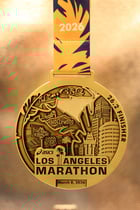
Antique finishes are one of the best choices when a medal design has a lot of depth.
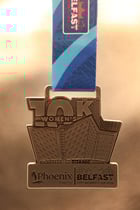
Antique gold, antique silver, and antique bronze create darker areas in recessed parts of the design. This adds natural contrast and makes the artwork easier to see.
That’s why antique finishes are often used for marathons, endurance events, and medals with detailed logos or landmarks.
Why it works
\- Adds contrast and depth
\- Makes fine detail stand out
\- Creates a classic, high-quality look
\- Great for high detail design
Keep in mind
Antique finishes tend to come out with darker depth in the recessed level that look almost burnt; this gives the medal real depth and is fantastic for a design to look detailed and premium without enamel fill.
3\. Matte Finishes
Best for: modern events, minimalist designs, corporate awards
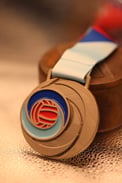
Matte finishes are smooth and less reflective than shiny plating. They have a more modern look and can feel very premium, especially with clean artwork and strong shapes.
Matte gold and matte silver are popular for events that want a sleek look without too much shine.
Why it works:
- Modern and high-end appearance
\- Less glare in photos
\- Great for clean designs and bold shapes
Keep in mind
Matte finishes can sometimes reduce contrast to detailed artwork. For medals with a lot of fine detail, antique or dual plated finishes often show the design more clearly
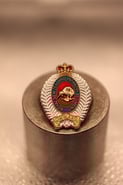
## 4. Dual Plated Finishes
Best for: premium medals, anniversary events, championships, high-impact designs
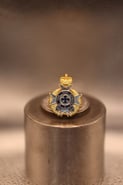
Dual-plated medals use two different finishes on the same medal, such as:
\- gold and silver
\- antique gold and shiny gold
\- black nickel and gold
This creates contrast and makes certain parts of the design stand out, such as the event logo, year, or centerpiece.
Dual-plated finishes are often used when an event wants a medal that feels more expensive and more customized.
Why it works:
**-** Adds contrast without needing colour
**-** Makes medals look more premium
**-** Helps highlight important design elements
Keep in mind
Dual plating should be used carefully. Too many finish changes can make a medal look busy instead of clean.
## 5. Black Nickel and Dark Finishes
Best for: modern designs, motorsport events, night runs, bold branding
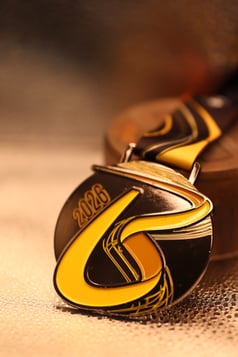
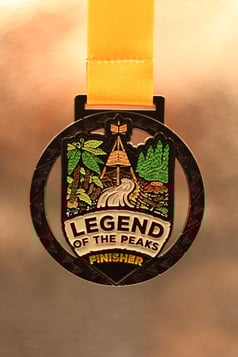
Black nickel is a popular finish for events that want a darker, more modern look.
It creates strong contrast, especially when paired with shiny highlights or enamel colour. It’s a great choice for medals that need to stand out and feel different from traditional gold or silver.
Why it works:
\- Modern and bold appearance
\- Strong contrast with enamel
\- Makes bright colours stand out
Keep in mind
Dark finishes can hide small details if the relief is too shallow. A deeper 3D design usually works best.
## 6. Coloured Dye Finishes
Best for: themed events, branded medals, fun runs, modern designs
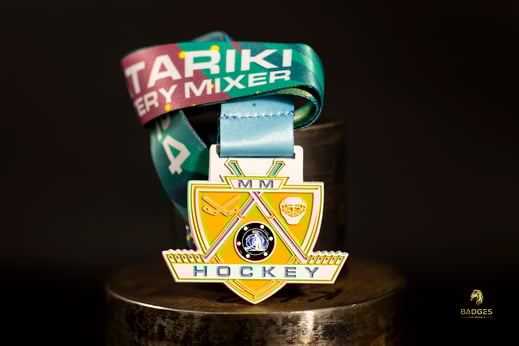
Coloured dye finishes allow a medal to have a coloured metal surface rather than a standard gold, silver, or bronze look. Common choices include red, blue, green, and other bright tones.
This is a popular option for events that want medals to match a theme or brand colour without relying entirely on enamel.
Coloured dye finishes can be used across the whole medal or on specific areas, depending on the design.
Why it works:
\- Adds bold colour without large enamel areas
\-Great for themed medals
\- Makes medals stand out instantly
Keep in mind
Coloured dye finishes often work best on designs with strong, simple shapes. On very detailed medals, the colour can sometimes reduce contrast compared to antique finishes.
How to Choose the Right Finish for Your Event
If you’re not sure which finish to choose, here are some simple guidelines:
Choose shiny finishes if you want:
**-** a classic medal look
**-** a bright “winner” feel
**-** a traditional award style
Choose antique finishes if you want:
**-** detail to stand out clearly
**-** a classic, high-quality look
**-** a medal that feels collectible
Choose matte finishes if you want**:**
**-** a modern, clean style
**-** less shine and glare
**-** a more subtle premium look
Choose dual-plated finishes if you want:
**-** a more premium look
**-** contrast without using colour
**-** a medal that feels more custom
Choose black nickel if you want:
**-** a bold modern style
**-** strong contrast
**-** something different from standard finishes
Choose coloured dye finishes if you want:
**-** a medal that matches a theme
**-** bright colour without heavy enamel
**-** a modern and eye-catching look
## **The Finish Should Match the Story **
A medal is more than an award.
It’s something people keep.
The finish you choose should match the style of the event and the feeling you want the medal to have.
Whether it’s shiny, antique, matte, black nickel, coloured dye, or dual plated, the right finish can completely change how the medal looks and how it’s remembered.
Because the best medals aren’t just handed out.
They’re kept for years.
[Read: Metal Medals Vs Wooden Medals Vs Insert Medals](https://blog.badgesandmedals.com/learning-centre/best-medal-type)
### Categories
- [Custom Medals (51)](https://blog.badgesandmedals.com/learning-centre/tag/custom-medals)
- [Custom Challenge Coins (24)](https://blog.badgesandmedals.com/learning-centre/tag/custom-challenge-coins)
- [Design (17)](https://blog.badgesandmedals.com/learning-centre/tag/design)
- [Costs (8)](https://blog.badgesandmedals.com/learning-centre/tag/costs)
- [Custom Lapel Pins (7)](https://blog.badgesandmedals.com/learning-centre/tag/custom-lapel-pins)
- [Ethics (7)](https://blog.badgesandmedals.com/learning-centre/tag/ethics)
- [Custom Trophies (5)](https://blog.badgesandmedals.com/learning-centre/tag/custom-trophies)
- [Custom Government Insignia (4)](https://blog.badgesandmedals.com/learning-centre/tag/custom-government-insignia)
- [Event (2)](https://blog.badgesandmedals.com/learning-centre/tag/event)
- [Event Marketing (2)](https://blog.badgesandmedals.com/learning-centre/tag/event-marketing)
- [Freebies (2)](https://blog.badgesandmedals.com/learning-centre/tag/freebies)
see all
### Recent Posts
- [How Badges and Medals Sustainability Programs Work](https://blog.badgesandmedals.com/learning-centre/badges-and-medals-sustainable)
- [Sustainable Packaging For Medals: What Are The Options?](https://blog.badgesandmedals.com/learning-centre/sustainable-packaging-medal)
- [Are race registrations still discretionary?](https://blog.badgesandmedals.com/learning-centre/are-race-registrations-still-discretionary)

*Badges and Medals acknowledges the Traditional Custodians of Country throughout Australia and recognises their continuing connection to land, water, and community. We pay our respect to them and their cultures and to Elders past, present and emerging.*
### Contact & Locations
Email: [support@badgesandmedals.com](mailto:support@badgesandmedals.com)
Phone (AU): [+61 2 9066 6772](tel:+61290666772)
Phone (NZ): [+64 3 577 7733](tel:+6435777733)
ABN 80 662 795 682
### New Zealand
The Precinct,
40 Onehunga Mall,
Onehunga, Auckland, 1061
### Australia
Level 6,
10 Herb Elliott Ave,
Sydney Olympic Park, NSW, 2127
### United States
31435 Stephenson Hwy, Madison Heights, MI 48071
### Industries
[Government Insignia](https://badgesandmedals.com/government-insignia/)
[Event Medals](https://badgesandmedals.com/event-medals/)
[School Badge Wear](https://badgesandmedals.com/school-badge-wear/)
### Other Pages
[About](https://badgesandmedals.com/about/)
[Contact](https://badgesandmedals.com/contact/)
[Learning Centre](https://badgesandmedals.com/learning-centre/)
### Newsletter
Want the latest award trends and money-saving tips delivered straight to your inbox? Then subscribe to our monthly newsletter!
[Join 5k Subscribers](https://share.hsforms.com/1kGn0OLTfQE6-qa-naJPT7gq0kh8?__hstc=112894363.e3237574ab9d74ce043061dc7de88c9b.1708490174746.1708502001932.1708514225514.4&__hssc=112894363.43.1708514225514&__hsfp=541284016)

Certified
*All logos, emblems, and mottos represented on this site are registered trademarks of their respective owners. By submitting designs to Badges and Medals, the purchasing party warrants that they have or have had the legal right to reproduce or have reproduced any logo or other image associated with their order. Images on this site are used as samples for illustrative purposes only and are not for sale.*
Copyright © 2026 Badges & Medals. All Rights Reserved.
- [Ethical Policy](https://blog.badgesandmedals.com/hubfs/BadgesAndMedals_February2024/Pdfs/Ethical-Policy-1.pdf)
- [Quality Policy](https://blog.badgesandmedals.com/hubfs/BadgesAndMedals_February2024/Pdfs/Quality-Policy.pdf)
- [Privacy Policy](https://badgesandmedals.com/privacy-policy/)
```json
{
"@context" : "https://schema.org",
"@type" : "BlogPosting",
"author" : {
"@type" : "Person",
"name" : "Kasey Wright",
"url" : "https://blog.badgesandmedals.com/learning-centre/author/kasey-wright"
},
"dateModified" : "2026-03-05T19:49:35.293Z",
"datePublished" : "2026-03-05T19:49:35.000Z",
"headline" : "Gold, Antique, Matte or Dual Plated? How to Choose the Right Medal Finish",
"image" : [ "https://blog.badgesandmedals.com/hubfs/IMG_4074.jpg" ],
"mainEntityOfPage" : {
"@id" : "https://blog.badgesandmedals.com/learning-centre/gold-antique-matte-or-dual-plated-how-to-choose-the-right-medal-finish",
"@type" : "WebPage"
},
"publisher" : {
"@type" : "Organization",
"logo" : {
"@type" : "ImageObject",
"url" : "https://blog.badgesandmedals.com/hubfs/B&M-Logo-insignia-6.png"
}
}
}
```